Wild Sri Lanka · The complete guide

Safari & Wildlife in Sri Lanka

Twenty-six national parks and a constellation of sanctuaries on one small island - leopards at Yala, the planet's greatest elephant gathering at Minneriya, rainforests full of endemic birds, and cloud-forest plains that end at World's End. Every park, with my photos, in one guide.

Updated · July 2026
One island, an entire safari continent

Why Sri Lanka is Asia's best safari island

There are currently 26 national parks in Sri Lanka, spread across the country and categorised by climate zone - from dry-zone big-game country to montane cloud forest. Between them they hold all of the island's endemic plants, animals and birds: the densest leopard population on Earth, thousands of wild elephants, sloth bears, and a bird list past 500 species. Add the blue whales offshore and Sri Lanka is one of the only places anywhere you can see the world's biggest land animal and biggest animal, full stop, in a single day.

26
National parks island-wide
131,500 ha
Largest & oldest · Wilpattu
100s
Of elephants at the Minneriya Gathering
Big 4
Leopard · elephant · sloth bear · blue whale
The tool

What do you want to see?

Pick your priority and get the right parks, the right months, and the tip that makes the difference - a working replacement for the old park finder.

🦁 Wildlife planner

Tap an interest - recommendations update instantly.

The full directory

Every national park & sanctuary, with photos

All the parks from my travels - same photos, same guides - organised by what they're best for. Every card links to my full guide for that park.

Yala National Park, Sri Lanka - photo by Travel With Uma Big-game safari

Yala National Park

Hambantota / Moneragala

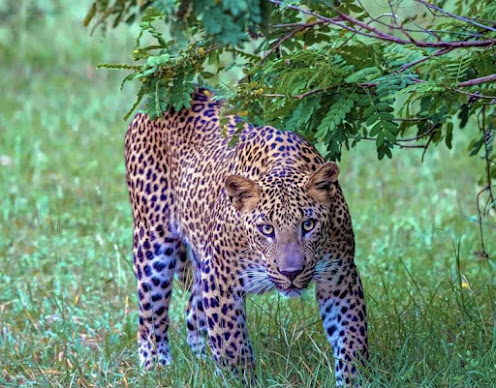
Sri Lanka's most famous park - also known as Ruhuna - spanning Hambantota and Moneragala with one of the world's densest leopard populations, plus elephants, sloth bears and crocodiles. Dawn drives in Block 1 give the best sightings; the park traditionally closes around September–October.

Wilpattu National Park, Sri Lanka - photo by Travel With Uma Big-game safari

Wilpattu National Park

Anuradhapura / North-West

The oldest and largest national park in Sri Lanka at 131,500 hectares, stretching from the north-west coast toward ancient Anuradhapura. Famous for its natural 'villu' lakes, leopards and sloth bears - Yala's quieter, wilder rival.

Udawalawe National Park, Sri Lanka - photo by Travel With Uma Big-game safari

Udawalawe National Park

Sabaragamuwa / Uva border

The best place in Sri Lanka to see wild Asian elephants - reliably, in any month, around the great Udawalawe Reservoir. Pair a drive with feeding time at the nearby Elephant Transit Home, which rehabilitates orphaned calves for release.

Minneriya National Park, Sri Lanka - photo by Travel With Uma Elephant herds

Minneriya National Park

Polonnaruwa

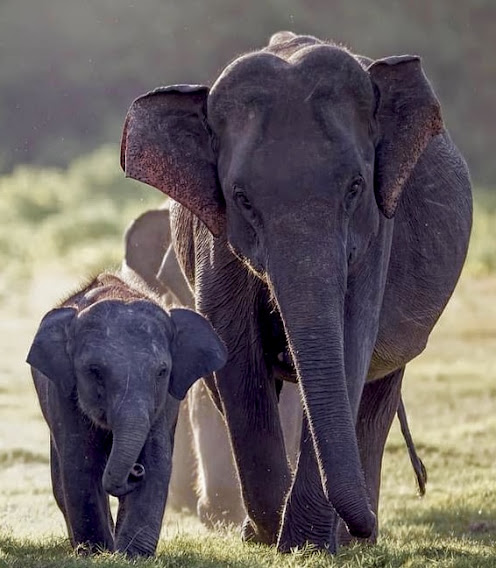
Home of 'The Gathering' - in the late dry season (August–September) hundreds of wild elephants converge on the shores of the ancient Minneriya tank, the largest meeting of Asian elephants on Earth. Six kilometres from Habarana, in the shadow of the Cultural Triangle.

Kaudulla National Park, Sri Lanka - photo by Travel With Uma Elephant herds

Kaudulla National Park

Polonnaruwa

Minneriya's twin, 22km north of Habarana across 6,900 hectares with a resident elephant population of over 200. The herds move between Kaudulla and Minneriya with the water levels - your jeep driver will know where the Gathering is on the day.

Hurulu Eco Park, Sri Lanka - photo by Travel With Uma Elephant herds

Hurulu Eco Park

Habarana

A 25,000-hectare biosphere buffer north of Habarana that shelters elephant herds moving between Minneriya and Kaudulla - the reliable backup when water levels shift the Gathering, and often open for afternoon drives when the main parks are quiet.

Kumana National Park, Sri Lanka - photo by Travel With Uma Big-game safari

Kumana National Park

Panama / Eastern Province

Yala's eastern neighbour and Sri Lanka's 'Paradise of Birds' - a famous nesting wetland (May–July) that also shares Yala's big mammals, with a fraction of its traffic. The classic add-on to an Arugam Bay surf trip.

Bundala National Park, Sri Lanka - photo by Travel With Uma Birds & wetlands

Bundala National Park

Hambantota

A Ramsar wetland of lagoons, dunes and thorn scrub along the Hambantota coast - Sri Lanka's flamingo headquarters (November–March) and a birder's alternative to Yala next door, with crocodiles and elephants as supporting cast.

Lunugamvehera National Park, Sri Lanka - photo by Travel With Uma Big-game safari

Lunugamvehera National Park

Hambantota

The 24,000-hectare corridor established to protect elephants migrating between Yala and Udawalawe - dry mixed forest around the Lunugamvehera reservoir that rewards travellers looking for a crowd-free southern safari.

Wasgamuwa National Park, Sri Lanka - photo by Travel With Uma Big-game safari

Wasgamuwa National Park

Matale / Polonnaruwa

One of the island's oldest forests - the name comes from 'Walas-gamuwa', the village of bears - with strong elephant herds, sloth bears and far fewer jeeps than the famous parks. The wild heart between Matale and Polonnaruwa.

Lahugala National Park, Sri Lanka - photo by Travel With Uma Big-game safari

Lahugala National Park

Pottuvil / Ampara

A compact 5,131-hectare sanctuary (protected since 1966) near Pottuvil where elephants gather to feed on beru grass around the tanks - often visible right from the Arugam Bay road at dusk.

Gal Oya National Park, Sri Lanka - photo by Travel With Uma Big-game safari

Gal Oya National Park

Bibile / Ampara

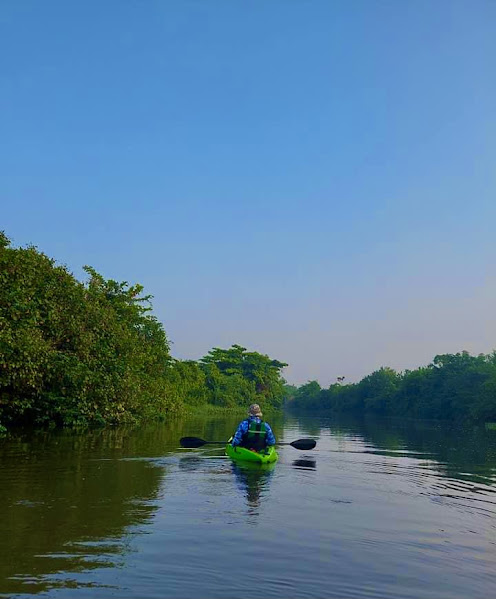
Sri Lanka's boat-safari park: cruise the Senanayake Samudraya reservoir to watch elephants swim between islands - a sight found nowhere else on the island - with natural pools along the Gal Oya river for the adventurous.

Nilgala (Gal Oya) Entrance, Sri Lanka - photo by Travel With Uma Big-game safari

Nilgala (Gal Oya) Entrance

Uva / Ampara border

The wilder Nilgala gateway to Gal Oya - 26,000 hectares of savannah-like medicinal-herb forest shared by the Wildlife and Forest departments, sacred to the island's indigenous Vedda community.

Horton Plains National Park, Sri Lanka - photo by Travel With Uma Highland parks

Horton Plains National Park

Nuwara Eliya

A UNESCO-listed plateau of montane grassland and cloud forest at 2,100m, ending at the sheer kilometre drop of World's End. Sambar deer graze the mist; the 9km loop (start by 6:30am, before the clouds) passes Baker's Falls. The watershed of most of the island's great rivers.

Knuckles Mountain Range, Sri Lanka - photo by Travel With Uma Highland parks

Knuckles Mountain Range

Kandy / Matale

A UNESCO World Heritage wilderness of 34 peaks between Kandy and Matale - cloud forest, hidden villages, waterfalls and endemic species in an ecosystem still free of human settlement at its core. Sri Lanka's best multi-day trekking country.

Moon Plains, Sri Lanka - photo by Travel With Uma Highland parks

Moon Plains

Nuwara Eliya

Nuwara Eliya's newer viewpoint park - a 360-degree sweep over the surrounding peaks nicknamed 'Mini World's End', reached by open safari jeep from town. A quick, easy highland fix when Horton Plains doesn't fit the schedule.

Galway's Land National Park, Sri Lanka - photo by Travel With Uma Highland parks

Galway's Land National Park

Nuwara Eliya

A pocket-sized ancient jungle on the edge of Nuwara Eliya town - a 2.3km loop through old-growth forest that even the colonial era never felled, at its best on early mornings when the endemic birds (including the dusky-blue flycatcher) are active.

Sinharaja Forest Reserve, Sri Lanka - photo by Travel With Uma Rainforest walks

Sinharaja Forest Reserve

Sabaragamuwa / Galle border

The island's last great lowland rainforest - a UNESCO Biosphere Reserve and World Heritage Site where most of Sri Lanka's endemic birds, and its famous mixed-species feeding flocks, live in 11,250 hectares of dripping green. Go with a guide; the forest reveals nothing to the hurried.

Kanneliya Rainforest, Sri Lanka - photo by Travel With Uma Rainforest walks

Kanneliya Rainforest

Galle

The heart of the KDN forest complex, 35km inland from Galle - 6,144 hectares of rainforest trails, giant creepers and natural pools that make the easiest 'real rainforest' day trip from the south coast.

Makandawa Rain Forest, Sri Lanka - photo by Travel With Uma Rainforest walks

Makandawa Rain Forest

Kitulgala

One of Sri Lanka's oldest protected rainforests (gazetted 1903), rising above the Kelani River at Kitulgala - combine a canopy walk in the reserve with the white-water rafting the town is famous for.

Kottawa Reserve Forest, Sri Lanka - photo by Travel With Uma Rainforest walks

Kottawa Reserve Forest

Galle

'Little Sinharaja' - a tranquil lowland evergreen pocket 21km from Galle, cool and quiet at 50–300m, perfect for a half-day rainforest walk without leaving the south.

Udawatta Kele Sanctuary, Sri Lanka - photo by Travel With Uma Rainforest walks

Udawatta Kele Sanctuary

Kandy

The royal forest above the Temple of the Tooth - 275 acres where Kandyan kings once rested and temple elephants once fed, now a birdsong-filled sanctuary of giant lianas twenty minutes' walk from Kandy's lake.

Horagolla National Park, Sri Lanka - photo by Travel With Uma Rainforest walks

Horagolla National Park

Nittambuwa / Gampaha

The only national park in Gampaha district - a 33-acre lowland wet-zone forest trail off the Colombo–Kandy road, and Sri Lanka's smallest national park; an easy green pause between the airport and the hills.

Bundala's neighbour: Anawilundawa, Sri Lanka - photo by Travel With Uma Birds & wetlands

Bundala's neighbour: Anawilundawa

Puttalam

Sri Lanka's second Ramsar wetland - 1,357 hectares of ancient cascading tanks near Puttalam sheltering 78 butterfly species, waterbirds in their thousands, and even elusive leopards and fishing cats. A birder's secret on the Kalpitiya road.

Muthurajawela Wetland, Sri Lanka - photo by Travel With Uma Birds & wetlands

Muthurajawela Wetland

Negombo

A 3,068-hectare coastal marsh at the southern end of Negombo's lagoon - one of the island's 12 priority wetlands, explored by boat among crocodiles, monitor lizards and waterbirds, ten minutes from the airport hotels.

Thangamale Bird Sanctuary, Sri Lanka - photo by Travel With Uma Birds & wetlands

Thangamale Bird Sanctuary

Haputale

A ridge-top sanctuary above Haputale where long walks through pine and cloud forest come with bird flocks and enormous southern views - the wild extension of a Lipton's Seat morning.

Kudumbigala Sanctuary, Sri Lanka - photo by Travel With Uma Rainforest walks

Kudumbigala Sanctuary

Pottuvil / Ampara

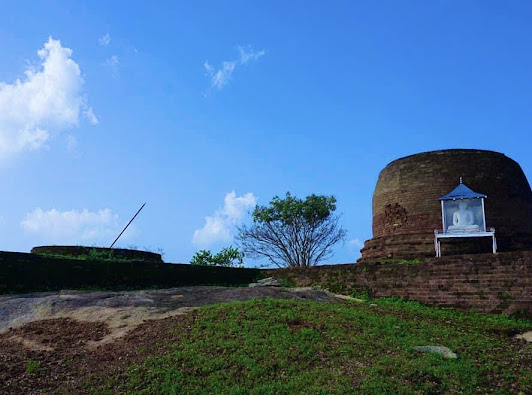
A 2,000-year-old forest monastery on a rock dome between Kumana and Arugam Bay - monks still meditate in its caves, and the summit panorama over jungle and coastline is the east's best-kept sunrise secret.

Angammedilla National Park, Sri Lanka - photo by Travel With Uma Big-game safari

Angammedilla National Park

Polonnaruwa

A quiet park half an hour from Polonnaruwa, protecting the Angamedilla canal and the catchment of the great Parakrama Samudra - elephants, ancient irrigation and almost no other visitors.

Do it right

Safari & camping know-how

Timing beats everything

Dawn and late-afternoon drives out-see midday every time - cats move in the cool hours. Seasonally: Yala leopards Feb–Jun (park closes ~Sep–Oct), the Gathering Aug–Sep, Bundala flamingos Nov–Mar, Sinharaja driest Jan–Apr & Aug–Sep, Horton Plains before 6:30am always.

Choose your jeep wisely

The driver-guide makes or breaks a safari. Book through your accommodation or a named operator, agree the duration and route beforehand, and favour outfits that keep respectful distances - a jeep that crowds a leopard ruins the sighting for everyone, animal included.

Camping inside the parks

The Department of Wildlife Conservation runs bookable campsites inside Yala, Udawalawe, Wasgamuwa, Horton Plains and others - falling asleep to elephant rumbles is unforgettable. Book via the DWC or a licensed camping operator; wild camping outside designated sites isn't permitted in the parks.

The 2026 reality

Record visitor years mean the famous parks are busy: book Yala and Gathering-season jeeps well ahead, or trade fame for wilderness at Wilpattu, Wasgamuwa, Kumana or Gal Oya - same animals, fraction of the traffic. Entrance fees are dollar-priced and change; carry card and cash.

Build it into your trip

Plan the wild days

🗓️ Get the season right

Leopards · the Gathering · flamingos · whales

Every safari window, month by month. Best time to visit →

🗺️ Slot the parks into a route

Yala day 9 · Minneriya day 3 · Udawalawe for families

Eight ready-made itineraries already place the safaris for you. Travel itineraries →

🚐 Sort the ground game

Transfers · drivers · tours

Getting to the park gates is half the plan - compare transfers or get a full tour quoted. Tour packages →

Quick answers

Safari FAQ

Which is better - Yala or Wilpattu?
Yala has the higher leopard density and the fame; Wilpattu has the space, the atmosphere and a fraction of the jeeps. First safari ever: Yala Block 1 at dawn. Second visit, or if crowds spoil it for you: Wilpattu, without hesitation.
When exactly is the Minneriya Gathering?
Roughly August–September, peaking as the dry season shrinks the tank - but the herds shift between Minneriya, Kaudulla and Hurulu with the water levels, sometimes week to week. Book a driver who checks where the elephants actually are that day, not just a park ticket.
Can I see leopards, elephants and whales on one trip?
Yes - it's Sri Lanka's signature hat-trick. February to early April is the overlap: Yala's best leopard months, reliable elephants at Udawalawe, and calm whale seas off Mirissa, all within the classic southern loop.
Is a safari suitable for young children?
Udawalawe is the family pick: guaranteed elephants, shorter drive times, calmer jeep etiquette, and the Elephant Transit Home's feeding times as a guaranteed hit. Save the 4:30am Yala starts for older kids.
Do I need to book park safaris in advance in 2026?
For Yala in season, Gathering-time Minneriya/Kaudulla, and any festive-period dates - yes, days to weeks ahead through your hotel or a named operator. Quieter parks (Wasgamuwa, Gal Oya, Kumana, Bundala) can usually be arranged a day out.
What should I bring on a game drive?
Neutral clothing, a warm layer for dawn, sun cream, water, binoculars if you have them, and your longest lens. Leave drones at home (they need CAA authorisation and are banned in parks) and keep arms inside the jeep - the animals are genuinely wild.