
When should you go? The sixty-second answer
If you want the single safest window for a classic first trip - Cultural Triangle, hill country, south-coast beaches - go between December and mid-April, with January to March the sweet spot and February statistically the driest, sunniest month of all. If your holiday falls in the European summer, don't cancel: May to September is the east coast's glorious dry season, when Trincomalee's white-sand bays and Arugam Bay's world-class surf are at their best while the south-west takes its rain. And if you can only travel in October or November, you'll meet the inter-monsoon - showery, yes, but also the year's lowest prices and thinnest crowds, with plenty of dry hours between the downpours.
That's the magic of Sri Lanka's geography: the island sits across two separate monsoon systems that water opposite corners at opposite times. There is genuinely no bad month to visit Sri Lanka - only wrong coasts for the month you've chosen. This guide exists to make sure you choose the right one.
How Sri Lanka's two monsoons actually work
Everything about timing a Sri Lanka trip flows from one piece of geography. The island's central mountains split it into climate zones, and two different monsoon winds arrive from two different directions at two different times of year. Understand this, and every "when to go" question answers itself.
The Yala monsoon (south-west)
From roughly May to September, moisture-laden winds blow in from the south-west and drop their rain on the south and west coasts and the south-western slopes of the hill country. Galle, Mirissa, Bentota and Colombo see their wettest months; the hills get misty afternoons. Meanwhile the east coast, sheltered behind the mountains, stays dry and sunny.
The Maha monsoon (north-east)
From roughly November to January, the winds reverse. Now the north and east - Trincomalee, Arugam Bay, Jaffna, and the northern dry zone - take the rain, while the south-west coast dries out into its long, golden high season. This is why December in Mirissa is perfect while December in Trinco is wet.
The inter-monsoons
Between the two systems - most noticeably in October and the first half of November, and more briefly around late April - thunderstorms can build anywhere on the island, usually as dramatic late-afternoon downpours after bright mornings. Unpredictable, but rarely trip-ruining, and rewarded with green landscapes, full waterfalls and shoulder-season prices.
The zones the monsoons ignore
The Cultural Triangle (Sigiriya, Anuradhapura, Polonnaruwa) sits in the dry zone and stays relatively rain-shadowed most of the year. The hill country is cooler than everywhere at all times - expect 10–20°C in Nuwara Eliya versus 30°C on the coast, whatever the month. Pack accordingly, whenever you come.
One honest caveat for recent years: the north-east monsoon season occasionally brews something stronger. In late November 2025, Cyclone Ditwah - the island's worst weather disaster in decades - brought severe flooding and landslides, and its damage to the famous hill railway was only partly repaired by mid-2026. Cyclones remain rare events, not annual ones, but if you travel in November–December it's sensible to keep an eye on forecasts and build a flexible day into your plan.
Sri Lanka month by month
Every month on the island, honestly described - weather by region, crowd levels, what's happening, and who each month suits best.
January
Peak seasonHigh season in full swing. The south and west coasts are dry and sparkling, the hill country is crisp with clear mornings (pack that jumper - Nuwara Eliya can touch single digits at night), and the Cultural Triangle is warm and comfortable. Whale-watching boats run daily out of Mirissa, and Adam's Peak pilgrimage season is well underway. Duruthu Perahera lights up Colombo's Kelaniya temple, and Thai Pongal brings Tamil harvest celebrations. The east coast is still finishing its monsoon - leave Trinco for later. Book ahead: January rooms in Ella, Galle Fort and Mirissa go early in a record year like 2026.
February
Driest monthStatistically the driest, sunniest month across the most visited parts of the island - and it's no coincidence that February 2026 set Sri Lanka's all-time monthly arrivals record. Beach days on the south coast are near-guaranteed, hill-country views are at their clearest for Horton Plains and Lipton's Seat, and the seas off Mirissa are calm for blue-whale trips. Colombo's dramatic Navam Perahera fills the streets around Gangaramaya temple with drummers and dancers. The only downsides are peak-season prices and company at the famous sights - beat both by starting your days early.
March
Hot & dryThe dry season holds, temperatures climb, and the crowds begin to soften after the February peak. The coast is hot (31–32°C) but the water is beautiful; the hills remain the escape valve, still cool and clear - this is arguably the best month for serious hill-country hiking before April's haze and heat. Whale season continues strong, surf is still good on the southern breaks, and the Cultural Triangle is dry, if increasingly baking by mid-afternoon. Climb Sigiriya at opening time, siesta at midday, explore again after three.
April
Festive · transitionalApril belongs to Avurudu - the Sinhala and Tamil New Year on the 13th–14th, when the whole island celebrates with sweetmeats, games, firecrackers and family homecomings. It's a joyful time to be here, with one caveat: transport and hotels around the holiday itself are packed with domestic travellers, so book that window solid. Weather-wise the heat peaks, and the first inter-monsoon showers arrive late in the month as afternoon thunderheads. It's the last reliable month for Mirissa's whales and the southern beach season's graceful finale.
May
Seasons swapThe great changeover. The Yala monsoon arrives on the south-west coast - expect proper rain there - while the east coast opens for business: Arugam Bay's surf season begins and Trincomalee's bays turn calm and clear. Vesak, the most sacred Buddhist festival, falls on May's full moon: for two magical nights the entire island glows with paper lanterns, lit pandals and free food stalls (dansal) - worth planning around wherever you are. In 2026 May also carried travel news: the free-visa scheme for 40 nationalities launched on 25 May, kicking the season off with a surge.
June
East & quietThe south-west is now properly in monsoon - showers most days, seas too rough for swimming on exposed beaches - but cross the mountains and it's another country: Trincomalee, Nilaveli and Pasikuda bask in dry-season sunshine with a fraction of the high-season crowds. Poson Poya, June's full moon, commemorates Buddhism's arrival on the island; thousands of white-clad pilgrims climb Mihintale's ancient steps, and joining them (respectfully) is one of the great cultural experiences. The Cultural Triangle stays dry and workable; the hills are green and misty.
July
East peak · PeraheraMid-summer brings the east coast to its peak - reliable sunshine in Trinco and pumping, world-class surf at Arugam Bay - and, in most years, the start of the island's greatest spectacle: the Esala Perahera in Kandy. Ten nights of torch-lit processions with hundreds of dancers, drummers, whip-crackers and lavishly robed elephants circle the Temple of the Tooth in late July or August (dates follow the lunar calendar - check the year's schedule and book Kandy accommodation months ahead). Elephants also begin gathering at Minneriya's shrinking reservoir. European school holidays bring the year's second crowd wave.
August
The GatheringThe east's dry season rolls on and two of Asia's great wildlife-and-culture events overlap. The Esala Perahera reaches its final, grandest nights in Kandy. And at Minneriya, "The Gathering" builds toward its peak - hundreds of wild elephants converging on the reservoir's grassy shores in the largest meeting of Asian elephants on Earth. Afternoon safaris here are extraordinary. It's a busy, buzzing month: with 2026's record visitor numbers, safari jeeps, Kandy hotels and east-coast beach stays all reward booking well ahead. The south-west remains showery but often has decent spells between systems.
September
Late-season valueA quietly excellent month. The east coast enjoys its last reliable stretch (Arugam Bay's surf softens but stays fun; Trinco's water is still lovely into late September), the Gathering at Minneriya/Kaudulla remains at full strength, and the summer crowds thin noticeably once European schools resume. One planning note: Yala National Park traditionally closes for several weeks around September–October to rest during the driest stretch - if a leopard safari is essential, aim earlier in the year or swap in Udawalawe or Wilpattu. The south-west monsoon begins to lose its punch late in the month.
October
Wettest · cheapestThe honest low season. October is the inter-monsoon proper: thunderstorms can build over any part of the island, typically as spectacular late-afternoon downpours after workable mornings. It's the wettest month for many regions - and also the year's best-value one, with genuine hotel bargains, empty viewpoints, and the island at its greenest, waterfalls at their fullest. Travellers who plan mornings-out, afternoons-flexible do fine. Deepavali, the Tamil festival of lights, falls in October or early November, glowing brightest in Jaffna and the hill-country Tamil towns.
November
Transition · watch forecastsThe pivot month back toward high season. The north-east monsoon establishes over the east and north (their beach season is done), while the south-west progressively dries - by late November, Mirissa's whale boats are back out and the south coast feels like the season it's becoming. Shoulder-season prices linger into early December. The honest caveat: this is the window when rare severe weather can occur - Cyclone Ditwah struck in late November 2025 - so travel with forecast awareness and flexibility, not fear. Most Novembers pass with nothing more dramatic than afternoon showers.
December
Season opensHigh season proper. The south and west coasts are reliably dry by mid-month, the hills are crisp and clear, and the island fills with festive energy - Christmas is widely and warmly celebrated, and New Year's Eve on the southern beaches is legendary. Unduvap Poya's full moon opens the Adam's Peak pilgrimage season: the night-climb-for-sunrise ritual runs from now until May. Prices step up sharply from mid-December and peak over Christmas–New Year, when the best small hotels sell out months ahead - in a record year like 2026, treat festive-window bookings as urgent.
Best time by region
South & West coasts - Best November to April
The classic beach season runs from the tail of November through mid-April, with December–March the reliable core: calm turquoise water, dry days, and every beach shack and surf school open. May to September brings the Yala monsoon - rain, rough seas and red flags on exposed beaches - though prices drop and brief bright spells still happen. If your dates are fixed to the European summer, simply swap this coast for the east.

East coast - best May to September
The east lives on the opposite clock. Its dry season opens in May and runs to late September: flat, glass-clear water at Nilaveli and Pigeon Island, dependable sunshine, and the surf machine of Arugam Bay at full power. From November to January the north-east monsoon takes over and most beach operations wind down. The east is the reason a July or August trip to Sri Lanka isn't a compromise - it's simply a different, quieter, arguably more beautiful itinerary.

Hill country - best December to April, lovely year-round
The tea country works in every month - that's its charm - but December to April brings the clearest skies for the famous views: Lipton's Seat before the mist, World's End before the clouds, Ella Rock at sunrise. January–March is prime hiking weather. The south-west monsoon (May–Sep) wraps afternoons in atmospheric mist and feeds the waterfalls; October's rains turn everything impossibly green. Whenever you come, it's 10–15 degrees cooler up here - the year-round rule is simply: mornings for views, and bring a layer.

Cultural Triangle - good almost year-round
The ancient cities sit in the island's dry zone, rain-shadowed from the worst of both monsoons - which makes the Triangle the most forgiving region on the calendar. January through September is reliably workable; the north-east monsoon (Oct–Dec) brings its wettest weeks, though rarely washouts. The real variable is heat: from March the middle of the day bakes, so the golden rule is climb early, temple late, and nap like a local in between. August–September adds the elephant Gathering next door at Minneriya.

The North - Best May to September
Jaffna and the far north follow the east's rhythm: dry and at their best from May to September, wettest from October to January under the Maha monsoon. The north-west corner - Kalpitiya's lagoons and Wilpattu's forests - adds its own pattern: kitesurfing runs on two winds (roughly May–October and December–March), while Wilpattu safaris are best in the drier first half of the year. Deepavali (Oct/Nov) is the north's most luminous cultural moment if your timing lands there.
Best time by activity
Whale watching
Mirissa (south): November–April, with December–March the calm-sea core - one of Earth's most reliable blue-whale fisheries sits just offshore. Trincomalee (east): May–September picks up the baton with blue and sperm whales in season. Book dawn departures, choose responsible operators over cheap ones, and respect that sightings are probabilities, not guarantees - excellent probabilities, in the right month.
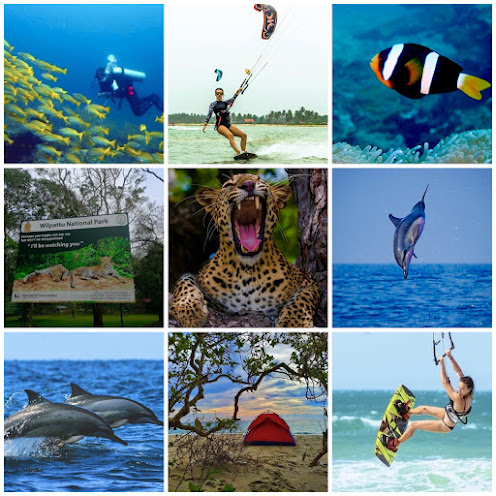
Surfing
Sri Lanka surfs all year - on alternating coasts. Arugam Bay and the east: May–September, when the point breaks (Main Point, Whiskey Point, Peanut Farm) line up with the season's south swells. The south coast - Weligama, Hikkaduwa, Midigama: November–April, from gentle learner beach-breaks to hollow reef sections. Beginners get waves in both seasons; Weligama's sand-bottom bay is the friendliest classroom on the island.

Safaris & The Gathering
Yala leopards: February–June offers the driest tracks and best sighting odds before the park's traditional September–October rest closure. Minneriya/Kaudulla's elephant Gathering: August–September - the planet's largest meeting of Asian elephants, best on afternoon drives. Udawalawe is the year-round elephant certainty; Wilpattu shines in the first half of the year. Whatever the park: dawn or late-afternoon drives beat midday, every time.

Adam's Peak (Sri Pada)
The pilgrimage season runs from December's Unduvap full moon to Vesak in May - the only window when the ~5,500-step night climb comes with lit stairways, open tea stalls, and the company of pilgrims that makes it special. January–March gives the best odds of a clear summit sunrise and the mountain's famous triangular shadow. Off-season climbing is possible but wet, dark and largely unserviced; time your itinerary to the season instead.

The hill-country train
The famous ride runs all year, and mist has its own magic - but for the postcard views, January–March mornings are clearest through the tea country. In 2026 the practical timing question is about the line itself: after Cyclone Ditwah, the spectacular Nanu Oya → Ella → Badulla stretch reopened mid-2026, while Kandy–Nanu Oya remains under repair with full restoration expected late 2026–early 2027. Reserved seats open 30 days ahead and vanish quickly in high season - set a reminder.

Waterfalls & hill hiking
A delicious trade-off. Waterfalls - Diyaluma, Bambarakanda, Dunhinda, Ramboda - thunder at their fullest during and just after the rains: roughly October–December island-wide, and through the south-west monsoon on the hill country's wet side. Hiking, by contrast, wants the January–March clarity for Ella Rock, Horton Plains and Lipton's Seat. The elegant compromise is December–January: recently-fed falls, drying trails, morning views.

The festival calendar
Sri Lanka's festivals follow the lunar calendar - every full moon is a Poya public holiday (banks and many businesses close, and alcohol sales pause for the day). These are the celebrations worth building a trip around.
🎊 Sinhala & Tamil New Year
The whole island goes home for Avurudu: traditional games, kiribath and sweetmeats, firecrackers at the auspicious minute. Wonderful atmosphere - but book transport and hotels around the holiday well ahead.
🏮 Vesak
Buddhism's most sacred festival becomes a nationwide festival of light: paper lanterns on every gate, glowing pandal storyboards, and dansal stalls giving free food to all comers. Colombo and Kandy glow brightest.
🐘 Esala Perahera
Ten escalating nights of Sri Lanka's grandest pageant - fire dancers, whip crackers, drummers and richly robed elephants honouring the Tooth Relic. Dates shift with the moon; grandstand seats and Kandy hotels sell out months ahead.
🪔 Deepavali
The Tamil festival of lights fills homes and kovils with oil lamps and kolam art - most atmospheric in Jaffna and the hill-country Tamil towns just as the low season quietens everything else.
🌕 Poson Poya
Commemorating Buddhism's arrival, centred on Mihintale's sacred hill near Anuradhapura - join thousands of white-clad pilgrims climbing the ancient steps at dusk.
🎄 Christmas & New Year
Celebrated warmly island-wide, with the south-coast beach towns throwing legendary New Year parties. The festive fortnight is the year's peak-priced window - book it first, months out.
What's different about timing a 2026 trip
Record crowds change the maths
2025 closed as the best tourism year in Sri Lankan history (2.36 million visitors), and 2026 is pacing right alongside it - February 2026 was the single best month ever recorded. The practical effect: the famous bottlenecks (reserved train seats, Yala jeeps, boutique rooms in Ella, Galle Fort and Mirissa) now sell out earlier than the guidebooks suggest. In peak months, book the fixed points six-to-twelve weeks ahead.
The free-visa effect
Since 25 May 2026, the 30-day tourist ETA is free for 40 nationalities - a deliberate accelerant on an already-booming year. It's removed a small cost, and added measurable momentum to arrivals. Apply online before you fly either way; see the full visa guide.
Rail recovery timeline
Cyclone Ditwah (late Nov 2025) broke the hill railway in its most scenic places. Mid-2026 status: Nanu Oya–Ella–Badulla restored and running; Kandy–Nanu Oya still under repair (full restoration expected late 2026–early 2027); road transfers bridge the gap. Check the live schedules page when you book.
Weather-watching, sensibly
One hard November and suddenly everyone asks about cyclones. Keep it proportional: severe systems remain rare, the island's tourism infrastructure recovered fast, and every month of 2026 so far has run normally. Travel in Nov–Dec with forecast awareness and one flexible day - that's all the hedge you need.
Pick your month, get your plan
Tap the month you're thinking of travelling and see instantly where to go, what to skip, what you'll experience - and the one thing to book first.
🗓️ When are you coming?
Based on everything above - the honest version for each month.