
2026: the island's biggest travel year ever
Sri Lanka is in the middle of a historic tourism boom. 2025 closed as the best year in the country's history, and 2026 is tracking right alongside it - which means the famous places are busier than they've been in a decade, and booking key hotels, trains and safaris ahead genuinely matters again.
Sri Lanka's most popular tourist destinations
Every survey, booking platform and arrival statistic tells the same story: these are the places nearly every visitor comes for. Here they are in depth - the island's most famous cities and sights, what actually makes each one special, and the one mistake to avoid at each.
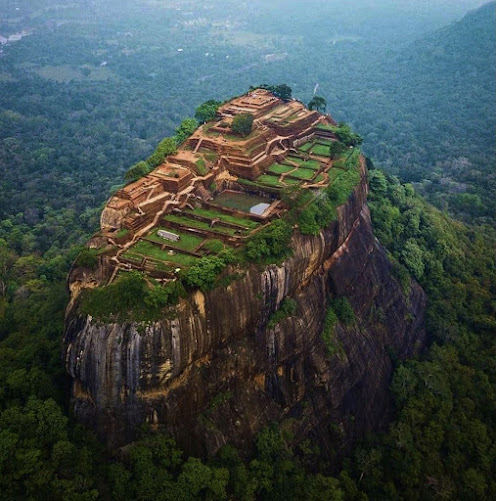
Sigiriya - The Lion Rock
A 200-metre column of rock rising sheer from the jungle, crowned by the ruins of a 5th-century royal citadel. You climb past the famous mirror wall and cloud-maiden frescoes, through a gateway carved as a giant lion's paws, to a summit palace with views across the whole dry-zone plain. It is, by almost any measure, the single most popular paid attraction in the country.
The mistake to avoid: climbing at midday. Be at the gate for the 7am opening - you'll beat both the heat and the tour-bus crowds, and morning light is best for the frescoes. Many travellers now also climb neighbouring Pidurangala Rock at dawn for the classic view of Sigiriya itself.
Kandy - The Sacred City
Ringed by misty hills around a calm central lake, Kandy was the last capital to fall to the colonial powers and remains the island's cultural and spiritual heart. The Temple of the Sacred Tooth Relic - housing a tooth of the Buddha - draws pilgrims from across the Buddhist world, and its drumming-filled evening puja is one of Sri Lanka's great sensory experiences. In July–August the city erupts for the Esala Perahera, a ten-night torch-lit procession of dancers, drummers and lavishly costumed elephants that ranks among Asia's most spectacular festivals.
The mistake to avoid: treating Kandy as a drive-through lunch stop between the airport and Ella. Stay a night - the Tooth Temple at dusk, the Royal Botanic Gardens at Peradeniya, and a walk on the Hanthana ridge deserve unhurried time.

Ella - The Hill-Country Darling
A decade ago Ella was a sleepy junction village; today it's the most Instagrammed place on the island, and honestly - it earns it. The Nine Arch Bridge curves through jungle-clad hills just outside town, the blue train still rumbles across it several times a day, and the walks to Little Adam's Peak and Ella Rock deliver enormous views for modest effort. The village itself is now a strip of cafés, rooftop bars and guesthouses with one of Asia's great backpacker atmospheres - and with the hill railway's scenic southern stretch restored in mid-2026, the classic train arrival is back.
The mistake to avoid: only photographing the bridge. Time your visit for a train crossing (station staff will tell you the next one), then walk the tracks onward to Demodara to see the engineering loop that made this line famous.

Galle - The Fort City
Behind massive 17th-century Dutch ramparts lies a perfectly intact colonial town: coral-and-lime merchant houses, a working lighthouse, churches, mosques and boutique hotels threaded along narrow streets that end at the sea. UNESCO calls it the best example of a fortified European city in South and Southeast Asia - but what makes Galle beloved is its lived-in feel: cricket on the green outside the walls, kids leaping off the bastions at high tide, and rampart walks at golden hour.
The mistake to avoid: day-tripping in and out at noon with the crowds. Sleep inside the fort - the town belongs to its residents again after 6pm, and sunset-to-breakfast is when it's most magical.

Colombo - The Commercial Capital
Most visitors pass through Colombo; more of them should stop. The capital rewards a day or two with a genuinely layered city: Pettah's chaotic bazaar streets beside the old Dutch Hospital's polished restaurants, the Gangaramaya temple's eclectic treasure-house, colonial-era Fort district architecture under a rising modern skyline, and the evening ritual of street food, kites and sea breeze on Galle Face Green. It also has, by a distance, the island's best dining scene.
The mistake to avoid: writing it off as "just the airport city." The airport is actually 35km north in Katunayake - and Colombo itself is where modern Sri Lanka is happening.

Nuwara Eliya - Little England
The highest town on the island sits in a bowl of tea-carpeted mountains, where the British recreated a piece of home: half-timbered houses, rose gardens, a golf course, and the stately Grand Hotel. Mornings are crisp enough for a jumper - a genuine novelty in the tropics - and the surrounding estates produce some of the world's finest high-grown tea. It's also the base for Horton Plains National Park and the sheer kilometre-high drop of World's End.
The mistake to avoid: skipping a tea factory tour because it sounds touristy. Watching leaf become tea, then tasting estate grades at the source, is one of the hill country's essential experiences.

Mirissa - Whales and Coconut Trees
A crescent of golden sand that became world-famous for two things: the largest animals that have ever lived, and a hill of coconut palms. From November to April, boats leave Mirissa harbour at dawn to find blue whales feeding in the deep water just offshore - one of the most reliable places on Earth to see them. Back on land, Coconut Tree Hill's palm-studded headland is the south coast's defining photograph, and the beach's restaurant-shacks glow with lanterns after dark.
The mistake to avoid: booking the cheapest whale boat. Choose an operator with a responsible-watching policy - smaller groups, respectful distances - for a better experience and healthier whales.

Anuradhapura - The ancient capital
For thirteen centuries this was one of Asia's great cities, and its scale still astonishes: brick dagobas the size of small hills, forest monasteries, vast reservoirs engineered two millennia ago - and at its heart the Sri Maha Bodhi, a fig tree grown from a cutting of the very tree under which the Buddha attained enlightenment, tended continuously for over 2,200 years. Unlike a dead ruin, Anuradhapura is a living place of pilgrimage, busiest and most atmospheric on full-moon poya days.
The mistake to avoid: trying to walk it. The sacred city sprawls over many square kilometres - rent a bicycle or take a tuk-tuk between the clusters, starting at dawn before the heat builds.

Browse destinations by region
Filter by region. Cards with photos are from my own travels - more of my photos are being added as I revisit each place.
Three classic routes
Most first trips combine destinations into one of these loops.
🔁 The Classic Loop · 10–14 days
The definitive first-timer's circuit: Cultural Triangle, hill-country train, safari and south-coast beaches in one anticlockwise sweep.
🌊 East Season Escape · 7–10 days
For May–September, when the east coast has its dry season while the south-west gets monsoon rain - culture first, then beaches and surf.
🌴 The Full Island · 3+ weeks
Adds the Tamil north and the east to the classic loop - the whole island, best done with a car and driver or a mix of trains and buses.